
Running a rental property business in 2026 means juggling dozens of moving parts: guest enquiries, booking confirmations, check-in instructions, pricing adjustments, cleaning schedules, and maintenance requests — often across multiple platforms simultaneously. For many property managers, these repetitive tasks silently consume the most valuable resource they have: time.
The numbers tell a striking story. According to Buildium’s property management industry report, the average property manager spends over 20 hours per week on tasks that could be partially or fully automated. That is more than two full working days lost to activities that software can handle faster, more accurately, and around the clock.
So where exactly is all that time going, and what are the most effective operators doing differently? We analysed the workflows of high-performing property management teams to identify seven automation strategies that consistently reclaim 15 or more hours every week.
1. Centralised Property Dashboards Eliminate Tab-Switching
The first major time drain is context switching. If you manage listings across Airbnb, Booking.com, Vrbo, and your own direct booking website, you are likely logging into four or more platforms every day just to check the basics: new reservations, guest messages, and calendar availability.

A centralised dashboard pulls all of this into a single view. Instead of cycling through browser tabs, you see every property, every booking, and every pending task in one place. The effect on daily efficiency is immediate:
- Single sign-on access to all channel data, reservations, and guest profiles
- Unified calendar that syncs availability across every platform in real time
- At-a-glance metrics like occupancy rates, revenue per available night, and upcoming check-ins
Property managers who adopt centralised platforms consistently report saving 3–5 hours per week on routine status checks alone. The compounding effect is significant: less context switching means fewer errors, faster response times, and lower cognitive load throughout the day.
2. Automated Guest Communication From Booking to Check-Out
Guest communication is where the largest block of recoverable time usually sits. Think about the typical lifecycle of a single booking: a confirmation message, pre-arrival instructions, check-in details, a mid-stay courtesy message, check-out reminders, and a review request. Multiply that by dozens of bookings per month and you are looking at hundreds of individual messages.
Modern property management systems use trigger-based messaging to handle this entire sequence automatically. When a new booking is confirmed, the system sends a personalised confirmation email. Two days before arrival, it sends check-in instructions with directions, Wi-Fi credentials, and house rules. On the morning of departure, it sends check-out reminders.
The best communication systems do not feel automated. They feel timely, personal, and thoughtful — because they are triggered by real events rather than sent on a generic schedule.
This approach has a dual benefit. Guests receive faster, more consistent communication (which directly impacts review scores), while property managers reclaim 4–6 hours per week that would otherwise be spent composing and sending repetitive messages. The Airbnb hosting resource centre specifically recommends template-based replies as a top strategy for maintaining Superhost status.
3. Smart Lock Integration and Keyless Entry
Physical key management is a surprisingly expensive operational overhead. For every check-in that requires a key handover, someone needs to be physically present — either the property manager, a co-host, or a cleaning team member acting as a liaison. This creates rigid scheduling constraints and limits the number of properties a single operator can manage.
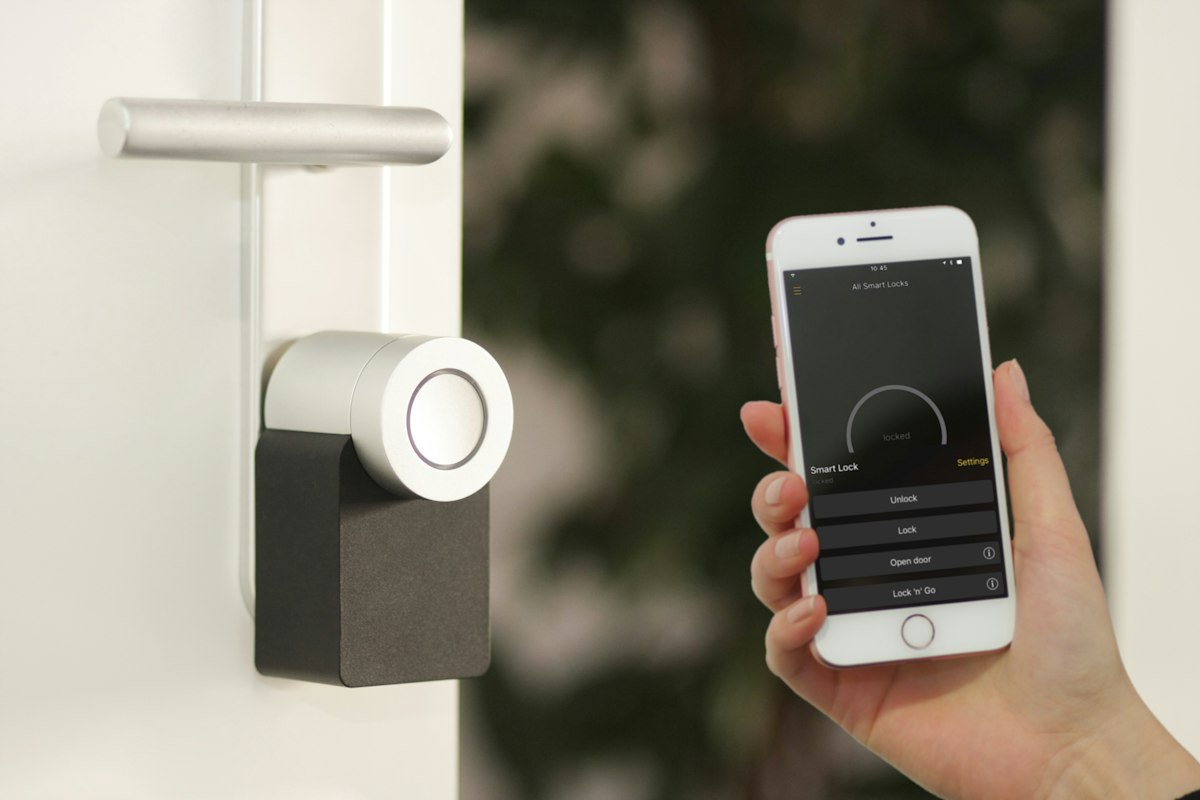
Smart locks fundamentally change this equation. By generating unique time-limited PIN codes for each guest — automatically tied to their check-in and check-out dates — property managers eliminate the need for physical presence entirely. The operational advantages cascade:
- Self-service check-in at any hour, removing the need to coordinate arrival times
- Automatic PIN expiry after check-out, eliminating security concerns about copied keys
- Cleaning crew codes with restricted time windows, so housekeeping can access properties without manager intervention
- Audit trails showing exactly when each door was opened and by whom
According to Grand View Research, the global smart lock market reached $2.9 billion in 2025, driven largely by the short-term rental and hospitality sectors. Property managers using smart lock integrations typically save 2–3 hours per week on key logistics alone, while simultaneously improving guest satisfaction with flexible arrival times.
4. Dynamic Pricing That Adjusts While You Sleep
Setting prices manually is one of those tasks that feels quick but compounds ruthlessly. Checking competitor rates, reviewing local event calendars, accounting for seasonal demand shifts, and adjusting each listing individually across multiple platforms — it all adds up to hours of analysis that must be repeated constantly to remain competitive.
Dynamic pricing engines automate this entire cycle. They analyse real-time market data — including competitor pricing, local events, day-of-week patterns, booking velocity, and historical occupancy — to recommend or automatically apply optimal nightly rates. The best systems operate continuously, adjusting prices multiple times per day as conditions change.
The financial impact is typically more dramatic than the time savings. Industry benchmarks suggest that data-driven dynamic pricing increases revenue by 10–40% compared to static pricing strategies, according to Phocuswright research. But the time savings matter too: automated pricing eliminates 2–3 hours per week of manual rate management while simultaneously outperforming human intuition on pricing accuracy.
What to Look For in a Pricing Engine
- Event awareness — does it account for local concerts, conferences, and sporting events?
- Minimum stay rules — can it dynamically adjust length-of-stay requirements to fill gaps?
- Multi-platform sync — does it push updated rates to all your channels simultaneously?
- Override capability — can you set floor and ceiling prices to maintain your brand positioning?
5. Streamlined Check-In and Digital Guest Portals
Even with automated messaging and smart locks, the check-in experience often generates a flurry of last-minute questions. Where is the parking? How do I work the heating? What is the Wi-Fi password? Where are extra towels? These questions are predictable, repetitive, and completely preventable with the right digital infrastructure.

A digital guest portal serves as a self-service hub where guests can find everything they need before and during their stay. Think of it as a digital concierge that is always available, never forgets details, and never gives inconsistent answers. A well-designed portal typically includes:
- Property guide with photos, descriptions, and house rules
- Local area recommendations for restaurants, attractions, and transport
- Appliance instructions (heating, coffee machine, smart TV setup)
- Emergency contacts and maintenance request forms
- Check-out procedures with clear, step-by-step instructions
Guest portals reduce inbound enquiries by 40–60% according to industry surveys by Hostaway. That translates to 2–4 hours per week reclaimed from answering the same questions about Wi-Fi passwords and thermostat controls.
6. Automated Financial Reporting and Invoicing
The back office is where many property managers lose time without realising it. Reconciling payments across platforms, generating owner statements, tracking expenses, and preparing tax documentation are tasks that expand in complexity as your portfolio grows. What takes an hour with five properties can take an entire day with fifty.
Automation transforms financial operations from a manual spreadsheet exercise into a continuous, real-time process:
- Automatic payment reconciliation across all booking channels
- Owner statements generated and distributed on schedule
- Expense tracking linked to specific properties for accurate P&L reporting
- Tax-ready exports that eliminate end-of-year scrambles
For property managers handling owner relationships, automated financial reporting is not just a time saver — it is a trust builder. Owners who receive clear, consistent, and timely financial reports are significantly more likely to stay with their management company. This alone can save 1–2 hours per week while simultaneously reducing churn.
7. Data-Driven Decision Making With Real-Time Analytics
The final piece of the automation puzzle is not about eliminating a task — it is about upgrading how you think. Property managers who rely on gut instinct and manual spreadsheets are making decisions with incomplete information. Those who use real-time analytics dashboards are seeing patterns that would otherwise be invisible.

Modern analytics provide answers to questions that used to require hours of manual analysis:
- Which properties have the highest revenue per available night, and why?
- What is the average lead time between booking and arrival, and how does it vary by season?
- Which communication touchpoints correlate most strongly with five-star reviews?
- Where are cancellation rates highest, and what factors predict them?
The time savings from automated analytics are harder to quantify because they manifest as better decisions rather than fewer tasks. But the cumulative effect — smarter pricing, better guest targeting, optimised operations — typically delivers more value than any other single automation. Research from McKinsey estimates that data-driven organisations are 23 times more likely to acquire customers and 19 times more likely to be profitable.
Putting It All Together: The Compound Effect
None of these strategies works in isolation. The real power of automation emerges when these systems are connected. A new booking triggers an automated confirmation and generates a smart lock PIN and updates the cleaning schedule and adjusts pricing for surrounding dates — all without a single manual action.
Here is what the weekly time savings look like when you combine all seven strategies:
- Centralised dashboard: 3–5 hours saved
- Automated communication: 4–6 hours saved
- Smart lock integration: 2–3 hours saved
- Dynamic pricing: 2–3 hours saved
- Guest portals: 2–4 hours saved
- Financial automation: 1–2 hours saved
- Analytics: 1–2 hours saved
Total: 15–25 hours per week — that is two to three full working days reclaimed for the work that actually grows your business: acquiring new properties, improving guest experiences, and building your brand.
Where to Start
If you are currently managing properties without automation, the prospect of implementing all seven strategies at once can feel overwhelming. The most practical approach is to start where the pain is greatest:
- If guest messages are consuming your evenings: start with automated communication templates
- If key logistics are limiting your scalability: invest in smart lock hardware and software integration
- If you suspect you are leaving money on the table: begin with dynamic pricing
- If you want a single platform that covers all seven areas: look for an all-in-one property management system that integrates these capabilities natively rather than bolting them together from separate tools
The property management industry is moving fast. Operators who embrace automation now are building operational advantages that compound over time — not just saving hours today, but positioning themselves to scale efficiently while competitors remain stuck in manual workflows.
The best time to automate was yesterday. The second best time is now.