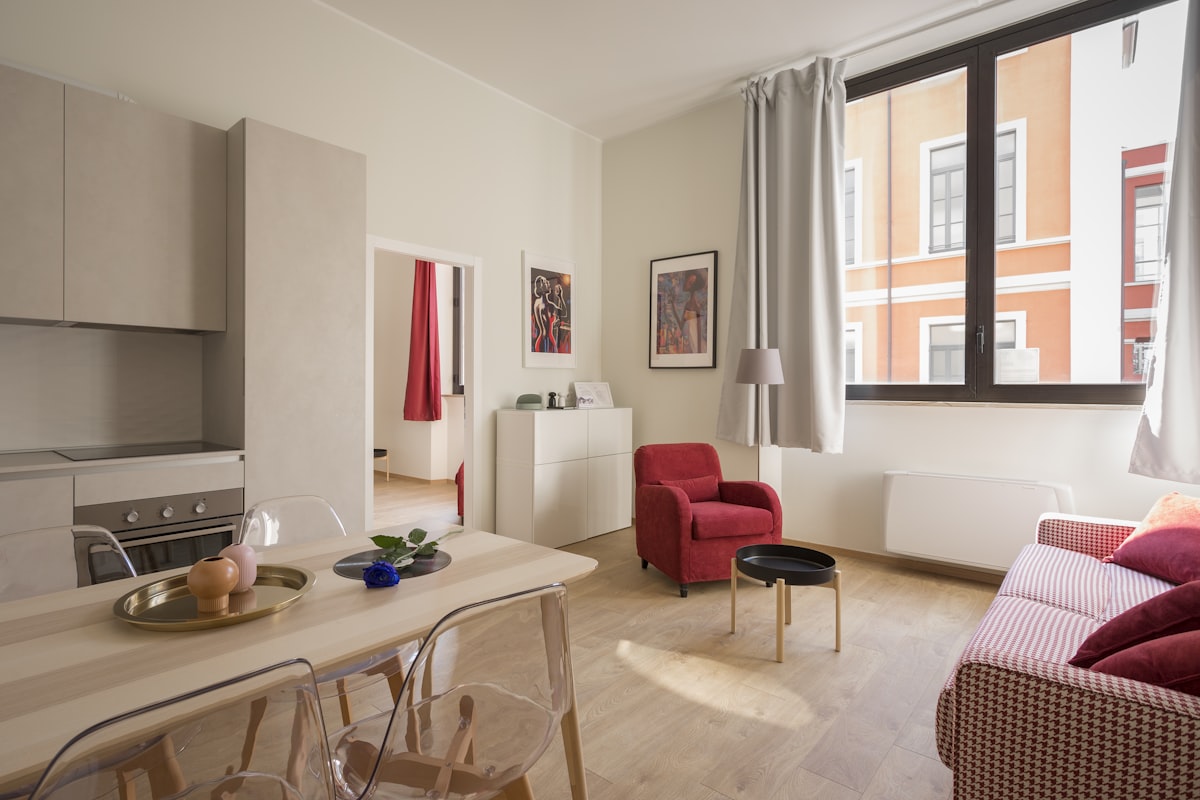
Most property managers think of vacancy as the absence of revenue. A night without a booking is a night without income — simple enough. But this framing dramatically understates the real damage. Vacancy is not neutral. It is actively expensive, because every fixed cost attached to your property continues to accrue whether a guest is sleeping there or not.
Mortgage or lease payments do not pause on empty nights. Council tax does not take a holiday. Insurance premiums, broadband, utility standing charges, garden maintenance, platform subscription fees — all of these tick along regardless of occupancy. When you calculate the true daily cost of an empty property, the number is often sobering.
For a typical two-bedroom city-centre apartment in the UK with monthly fixed costs of £2,400, the daily carrying cost is roughly £80. That means every vacant night does not simply earn £0 — it costs £80 in obligations that still need paying. Over a month, just five empty nights represent £400 in pure overhead with no corresponding income. Over a year, the compounding effect can easily exceed £5,000 per property.
Understanding the True Daily Cost of an Empty Night
Before you can fight vacancy effectively, you need to understand exactly what each empty night costs your business. This goes beyond the obvious missed nightly rate. A rigorous vacancy cost calculation should include:
- Mortgage or rent: the daily portion of your monthly property payment
- Council tax: divided by 365, this is a fixed daily obligation
- Insurance: property, contents, and public liability premiums pro-rated daily
- Utilities standing charges: gas, electric, water, and broadband base fees that apply even with zero usage
- Software and subscriptions: your PMS, channel manager, dynamic pricing tool, and smart lock subscriptions
- Depreciation: furniture, appliances, and décor lose value daily whether guests use them or not
- Opportunity cost: the revenue that night could have generated based on market demand

When operators at STR (formerly Smith Travel Research) analyse market performance, they consistently find that the highest-performing properties are not necessarily those with the highest nightly rates. They are the ones with the fewest unproductive nights. The maths is straightforward: a property earning £120 per night at 92% occupancy generates £40,296 annually, while the same property at £140 per night but only 78% occupancy produces £39,858. Rate means nothing without the occupancy to support it.
Gap Nights: The Silent Revenue Killer
Gap nights are the short vacant periods — typically one or two nights — that appear between confirmed bookings. They are the most insidious form of vacancy because they feel inevitable. A guest checks out on Monday, the next booking starts on Wednesday, and Tuesday sits empty. It seems like a scheduling accident, but across a portfolio and a full year, these orphan nights represent a staggering amount of lost revenue.
Consider a 10-property portfolio where each unit averages just three gap nights per month. That is 30 empty nights monthly across the portfolio, or 360 nights per year. At an average nightly rate of £110, those gap nights alone represent £39,600 in unrealised revenue — nearly the entire annual income of one property.
The operators who solve this problem use several complementary tactics:
- Orphan-night discounts: automatically reducing the rate for isolated single nights that sit between two bookings, making them attractive enough to fill
- Check-in/check-out day alignment: standardising changeover days (e.g., Friday to Friday for holiday lets) to eliminate scheduling gaps altogether
- Gap-night alerts: setting up automated notifications when a gap night appears in the calendar, giving you time to act before the opportunity passes
- Extended-stay incentives: offering a small discount to an existing guest if they extend their stay to cover the gap period
Dynamic Minimum Stays: Flexibility That Fills Calendars
Fixed minimum-stay requirements are one of the most common causes of unnecessary vacancy. A blanket three-night minimum sounds sensible — it reduces turnover costs, limits cleaning frequency, and attracts longer bookings. But the rigidity creates blind spots.
Imagine your calendar shows a four-night gap between two confirmed bookings. With a three-night minimum, a potential guest searching for a two-night weekend stay cannot book your property, even though those two nights would otherwise generate zero revenue. The minimum-stay rule, designed to protect your margins, has instead guaranteed vacancy.
Dynamic minimum stays solve this by adjusting the requirement based on calendar context. The rules are simple but powerful:
- Far out (60+ days): maintain your standard minimum stay to attract premium longer bookings
- Mid-range (14–60 days): reduce the minimum by one night to widen the pool of potential guests
- Close-in (under 14 days): drop to a one-night minimum for any remaining gaps, since filling the night at a lower rate is always better than absorbing the fixed costs of vacancy
Data from Transparent Intelligence shows that operators using dynamic minimum-stay rules achieve 6–12% higher occupancy compared to those using static minimums, with negligible impact on average daily rate.
Last-Minute Pricing Without Devaluing Your Brand
Dropping your rate at the last minute feels uncomfortable. It can seem desperate, and there is a legitimate concern that it trains guests to wait for discounts. But refusing to adjust rates on unsold nights is not discipline — it is a guarantee that those nights will earn nothing at all.

The key is to reduce rates strategically, not reactively. Professional operators use a tiered approach:
- 7 days out: if the night is still vacant, reduce the rate by 10–15% from the market-adjusted price
- 3 days out: apply a further 10% reduction, bringing the total discount to 20–25%
- Same day: if still unsold, drop to your floor price — the minimum rate that covers variable costs (cleaning, laundry, consumables) and contributes something toward fixed costs
A discounted night that covers your variable costs and contributes £40 toward fixed overheads is always preferable to an empty night that contributes nothing. The goal is not to maximise the rate on every single night — it is to maximise the total revenue across the entire calendar.
The brand-protection concern is real but manageable. Avoid advertising last-minute discounts publicly on your direct booking site. Instead, use OTA-specific promotions, mobile-only rates, or private offers to repeat guests. This fills the night without broadcasting a discount to future bookers.
Seasonal Demand Mapping: Anticipate, Do Not React
Many operators treat low-demand periods as unavoidable downturns — something to endure rather than manage. This is a strategic error. Every market has predictable demand patterns, and understanding them in advance allows you to adjust pricing, minimum stays, and marketing spend before vacancy takes hold.
Effective seasonal demand mapping requires three layers of data:
- Historical occupancy data: your own property’s performance over the past 12–24 months, broken down by week
- Market-level benchmarks: aggregated occupancy and rate data for your area from providers like STR Global or AirDNA
- Event calendars: local festivals, conferences, sporting events, school holidays, and bank holidays that drive or suppress demand
When you overlay these three data sources, clear patterns emerge. You can identify your shoulder seasons (the weeks between peak and off-peak), pinpoint specific low-demand weeks where you need to be more aggressive on pricing, and spot high-demand events where you should hold firm on rates and minimum stays.
The best operators build a seasonal playbook — a documented strategy for each month of the year that specifies target occupancy, rate ranges, minimum-stay rules, and marketing tactics. This transforms vacancy management from a reactive scramble into a planned operation.
Multi-Channel Distribution: Casting a Wider Net
Relying on a single booking channel is one of the most common causes of chronic under-occupancy. Every platform has a different audience, a different search algorithm, and a different geographic strength. Airbnb skews toward leisure travellers and younger demographics. Booking.com dominates European inbound travel. Vrbo attracts families looking for larger properties. Your direct booking website captures repeat guests and those who found you through search or social media.
Effective multi-channel distribution means listing your properties on at least three to four platforms while maintaining calendar synchronisation through a channel manager. The goal is not to be everywhere — it is to be on the channels that match your property type, guest demographic, and geographic market.
Consider these channel-selection principles:
- Urban apartments (1–2 bedrooms): Airbnb + Booking.com + direct bookings typically cover the widest audience
- Family holiday homes (3+ bedrooms): add Vrbo or Holidaylettings to capture the family and group market
- Luxury properties: consider niche platforms like Plum Guide or The Plum Guide alongside the major OTAs
- Business-travel locations: ensure Booking.com visibility is strong and consider corporate booking platforms
Research from Transparent Intelligence indicates that properties listed on three or more channels achieve 15–22% higher occupancy than single-channel listings, even after accounting for commission differences.
Building a Vacancy-Resistant Operation
Sustaining occupancy above 90% is not about any single tactic. It is about building an operational system where multiple strategies work together to close gaps before they become costly. The operators who consistently outperform their markets share a common discipline: they treat every empty night as a problem to be solved, not a fact to be accepted.
Here is a practical framework for building vacancy resistance into your operation:
- Weekly calendar reviews: scan the next 30 days for gap nights and act on them immediately
- Dynamic pricing automation: let your pricing tool handle the daily adjustments while you set the strategic guardrails
- Flexible minimum stays: implement time-based rules that tighten for far-out dates and loosen as the date approaches
- Channel diversification: maintain active listings on at least three platforms with synchronised calendars
- Seasonal playbooks: document your pricing and marketing strategy for every month of the year so decisions are proactive, not reactive
- Guest retention: build a repeat-guest programme that fills shoulder-season dates with loyal customers who book direct
The difference between a property that runs at 78% occupancy and one that runs at 92% is rarely the property itself. It is the system behind it. Every percentage point of occupancy gained translates directly to the bottom line, because the fixed costs remain the same whether the property is full or empty. That is the hidden cost of vacancy — and now you know how to fight it.